

+86 177 5198 6706
222, Block B, Diamond International, Guozhuang Road, Xuzhou, Jiangsu, China
Corrosion protection is a critical aspect of steel structure construction and a key factor in enhancing structural stability and reliability. Whether during design, construction, or operation, various factors—such as environmental conditions, structural characteristics, and costs—must be comprehensively considered. The most effective and rational anti-corrosion measures should be adopted based on project requirements to prevent corrosion from compromising structural safety. Maximizing the corrosion resistance of steel structures plays a positive role in the advancement of steel construction engineering.
01 Methods for Effective Corrosion Protection
1. Inherent Corrosion Resistance (Weathering Steel)
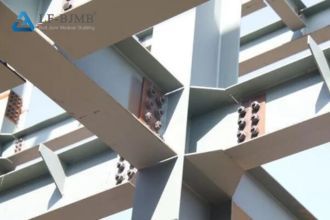
Select steel materials with superior corrosion resistance compared to standard structural steel—specifically, weathering steel. This type of steel typically contains alloying elements such as phosphorus, copper, nickel, chromium, and titanium, which facilitate the formation of a protective layer on the metal surface, thereby enhancing corrosion resistance. It also exhibits better low-temperature impact toughness than standard structural steel.
2. Protective Coatings
This is currently the most common and widely used method for protecting steel structures. Anti-corrosion coatings generally consist of particles and pigments dispersed within a liquid medium. When applied to the steel, the liquid coating dries, binding the pigment particles together to form a dense, cured film. This film prevents corrosive agents—such as air and water—from penetrating the structure, thereby shielding the steel from harmful substances and preserving the structure’s integrity and service life.
3. Hot-Dip Galvanizing
Hot-dip galvanizing involves immersing rust-cleaned steel components into a bath of molten zinc at approximately 600°C, creating a bonded zinc layer on the surface. The zinc coating thickness is at least 65 μm for thin plates (under 5 mm) and at least 86 μm for thicker plates. This process effectively prevents corrosion. Its advantages include exceptional durability, a high degree of industrialization, and consistent quality. Consequently, it is widely used for outdoor steel structures exposed to severe atmospheric corrosion that are difficult to maintain—such as power transmission towers, communication towers, and profiled steel sheets used in the lightweight steel structural systems that have become prevalent in recent years.
4. Thermal-Sprayed Aluminum (or Zinc) Composite Coatings
This method offers corrosion protection performance comparable to that of hot-dip galvanizing. The specific procedure involves first sandblasting the steel component’s surface to remove rust, exposing the bare metal and roughening the surface. Next, thermal spraying equipment—using heat sources such as oxy-acetylene flames, electric arcs, or plasma arcs—melts continuously fed aluminum (or zinc) wire. Compressed air is then used to propel the molten metal onto the steel surface, creating a honeycomb-like sprayed aluminum (or zinc) coating (approximately 80–100 μm thick). Finally, coatings such as epoxy resin or neoprene paint are applied to fill the micropores, resulting in a composite coating. The advantages of this process include high adaptability to component dimensions, with virtually no limitations regarding shape or size. However, compared to hot-dip galvanizing, this method is less industrialized, and the sandblasting and spraying processes involve high labor intensity.
02 Types of Corrosion in Steel Structures
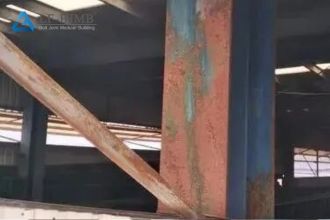
Common types of corrosion in industrial steel structures can be categorized into three groups: atmospheric corrosion, localized corrosion, and stress corrosion.
1. Atmospheric Corrosion: This is one of the most common types of corrosion affecting industrial steel structures and can significantly impact the structure’s overall stability and load-bearing capacity. It is primarily caused by prolonged exposure to the outdoor environment, where metal elements in the steel react with atmospheric moisture and air, leading to corrosion. Atmospheric corrosion is a continuous, long-term process that gradually penetrates the structure, compromising its quality and safety.
2. Stress Corrosion: This is a distinct form of corrosion characterized by sudden onset; it typically occurs when the steel structure is subjected to stress. There is a strong link between stress corrosion and structural stability, as the phenomenon is triggered by sudden structural changes (such as cracking) within the steel itself.
3. Localized Corrosion: This is another common form of corrosion in industrial steel structures and can be further classified into crevice corrosion and galvanic corrosion. Specifically… Crevice corrosion occurs during the construction of steel-structured industrial buildings when cracks form on the steel surface, allowing media such as moisture and air to penetrate the interior and gradually cause corrosion over time. Galvanic corrosion, on the other hand, arises from the potential difference (positive and negative potentials) between different metallic elements within the steel structure; generally, the negative potential is more prone to causing corrosion, and the resulting corrosion is more severe.
03 Hazards of Steel Structure Corrosion
1. Main Causes of Steel Structure Corrosion
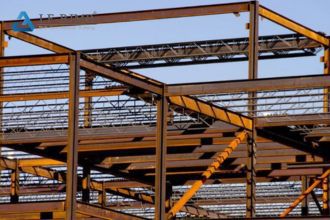
Steel-structured industrial buildings are often exposed to the elements for extended periods, leading to rusting caused by moisture and other corrosive agents in the air. Corrosion of steel at ambient temperatures is primarily electrochemical in nature. In atmospheric environments, steel undergoes rusting and corrosion due to factors such as oxygen, atmospheric moisture, and surface contaminants—including dirt, rust layers, and welding slag. Corrosion is mild when air humidity is below 60%, but becomes severe when humidity exceeds the critical threshold (60%–70%). When these buildings are located in areas with heavy air pollution or in coastal regions, high atmospheric salt content lowers the critical humidity level, facilitating the formation of a water film on the steel surface. Electrochemical corrosion reactions occur within this water film, driven by the potential difference between the steel components (acting as the anode) and surface impurities such as residual welding slag, rust layers, and mill scale (acting as the cathode); this is the primary cause of corrosion in steel structures.
2. Hazards of Steel Structure Corrosion: If corrosion issues are not addressed promptly, prolonged use compromises the structure’s strength and stability, rendering its load-bearing capacity insufficient to meet safety requirements. Over time, the combined effects of the natural environment exacerbate material fatigue, creating significant safety and quality risks.
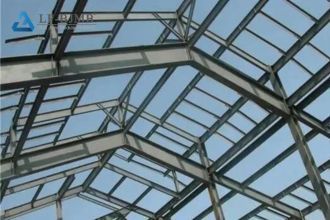
Steel structures offer advantages such as high strength, excellent ductility and toughness, and low self-weight, making them widely used in construction projects. Most steel components can be prefabricated in factories and subsequently transported to the site for assembly, thereby significantly shortening construction schedules. However, steel exhibits poor resistance to corrosion and rusting, resulting in significant annual economic losses. Furthermore, corrosion compromises the stability and quality of steel structures, posing serious safety risks. Therefore, analyzing the causes of corrosion in steel structures and the corresponding anti-corrosion measures is of great importance.
Copyright © Xuzhou LF Engineering & Construction Co., Ltd. All Rights Reserved.


 +86 177 5198 6706
 +86-516-8595-0258


