

+86 177 5198 6706
222, Block B, Diamond International, Guozhuang Road, Xuzhou, Jiangsu, China
Currently, production facilities and warehouses in China are trending toward larger-scale construction. With the continuous advancement of modern technology, enterprises are demanding increasingly larger floor areas for their production facilities. However, the thick columns typical of traditional buildings have become a major obstacle—they occupy a large footprint and severely limit the expansion of factory space. Squeezing out additional space is no easy task. In response, engineers have proposed an alternative solution: constructing with steel!
Steel structures feature columns with a small footprint, significantly improving the space utilization rate of the facility. Today, a visit to any industrial park in any city reveals tall, spacious steel-structured buildings; modern industrial facilities have widely adopted the steel structure model.
1. High Space Utilization
For enterprises with high demands on factory space, steel structures are an ideal choice because they enhance the space utilization rate of the facility. This is due to the fact that steel’s compressive and lateral bending strengths are 1.5 times those of concrete. Consequently, steel structures can achieve the same structural strength with a smaller cross-sectional area, thereby maximizing the limited usable space within the factory.
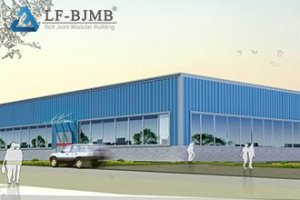
This feature is particularly prominent in warehouse construction. Steel-structured warehouses not only offer a larger usable area but can also easily accommodate large-span design requirements. More importantly, they effectively mitigate common operational risks in warehouses—compared to traditional buildings, steel structures have a lighter dead weight, and their material properties provide superior fire resistance and corrosion resistance, better protecting stored goods.
2. Short Construction Time
Prefabricated steel components are transported to the construction site for assembly and installation. This “manufacture-to-assembly” construction model significantly shortens the construction timeline, reducing both the project duration and labor costs.
Furthermore, when a company needs to relocate due to business adjustments, the lightweight nature of steel structures makes relocation projects more convenient; even when the building is decommissioned, the steel can be recycled without causing pollution. In today’s environmentally conscious era, this recyclability has become a key advantage for sustainable development.
3. Versatile Applications
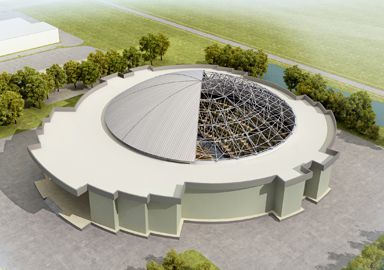
Steel structures have an extremely wide range of applications, suitable for single-story, long-span buildings such as factories, warehouses, and stadiums, as well as meeting the construction needs of office buildings and multi-story or high-rise structures.
Given these advantages of steel-frame construction, it is foreseeable that steel structures will become a trend in future development. This material and this emerging building structure significantly enhance both the aesthetic appeal and practical performance of projects. The aesthetics of some warehouses can reach new heights while still ensuring their practical functionality.
Copyright © Xuzhou LF Engineering & Construction Co., Ltd. All Rights Reserved.


 +86 177 5198 6706
 +86-516-8595-0258


