

+86 177 5193 6871
222, Block B, Diamond International, Guozhuang Road, Xuzhou, Jiangsu, China
In the field of residential construction, prefabricated steel-frame structures are gaining prominence due to their unique advantages. This construction method, which involves prefabricating steel components in a factory and rapidly assembling them on-site, not only overcomes the limitations of traditional construction models but also demonstrates significant advantages in efficiency, environmental sustainability, and structural performance, making it a key driver of residential industrialization.
1. Design Advantages of Prefabricated Steel Structures
From a design perspective, the flexibility of prefabricated steel-frame residential buildings is exceptional.
Structural Flexibility: The mechanical properties of steel provide significant freedom in structural design. In practical design, component cross-sections and spans can be flexibly adjusted to meet specific floor plan requirements, easily enabling open-plan layouts and diverse housing configurations.
Lightweight and High-Strength: Compared to traditional concrete structures, steel structures have a lighter self-weight, significantly reducing foundation loads and making them particularly suitable for areas with complex geological conditions. Their excellent ductility and seismic resistance also ensure greater safety for residents during emergencies such as earthquakes.
Optimized Joints: Optimized joint design is a key feature of modern prefabricated steel structures. The use of standardized bolted or welded joints not only ensures precise component assembly but also enhances the overall structural rigidity and durability, keeping the building stable throughout its long-term use.
2. Construction Efficiency and Sustainability
The most obvious advantage of prefabricated steel-frame housing lies in the significant improvement in construction efficiency. Steel components are manufactured through factory prefabrication, which is unaffected by weather changes and allows for millimeter-level precision in processing. Once transported to the construction site, assembly can be rapidly completed using lifting equipment. Practice has proven that the construction cycle for the main structure can be shortened by more than 40% compared to traditional construction methods.
In terms of sustainability, prefabricated steel-frame housing offers significant advantages. Steel has a recycling rate exceeding 90%; after a building is demolished, most components can be reprocessed and reused, greatly reducing construction waste throughout the entire lifecycle from construction to demolition. Since concrete does not need to be mixed on-site during construction, dust and noise pollution are significantly reduced, fully meeting the requirements of green construction. With environmental policies becoming increasingly stringent, this construction method aligns perfectly with the trend toward low-carbon development.
3. Application Cases of Prefabricated Steel-Frame Residential Buildings
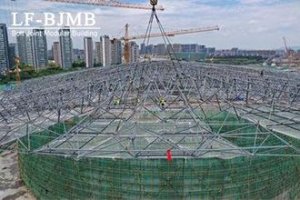
In practical applications, prefabricated steel-frame residential buildings have demonstrated significant results in projects across multiple regions. In a residential project featuring irregular-shaped columns, the construction team optimized joint designs to ensure the integrity of the interior space while improving structural load-bearing capacity by 20%. In another high-rise residential project, the use of a modular steel structure system achieved a prefabrication rate of 85%, reducing on-site wet work by 70% and effectively alleviating the problem of dust pollution that typically plagues traditional construction processes.
As design technologies evolve and construction techniques mature, the advantages of prefabricated steel-frame housing will become even more apparent. It not only transforms traditional housing construction methods but also drives the housing industry toward greater efficiency, environmental sustainability, and higher quality. In the future, it is expected to find widespread application in areas such as affordable housing and commercial housing, providing people with safer, more comfortable, and more sustainable living options.
Copyright © Xuzhou LF Engineering & Construction Co., Ltd. All Rights Reserved.


 +86-17751936871
 +86-516-8595-0258


