

+86 177 5198 6706
222, Block B, Diamond International, Guozhuang Road, Xuzhou, Jiangsu, China
Most power and energy infrastructure projects — new power plants, LNG terminals and energy facilities — are remembered for the turbine hall and the tank farm. But the site also needs a set of large-span steel buildings: an equipment hall for large components, a warehouse for spares, a maintenance workshop, and a covered fuel or bulk storage. For an owner, general contractor or consulting engineer, these buildings are where crane loads, column-free space, coastal corrosion and commissioning schedule all meet.
The main turbine and boiler structures are engineered by the plant contractor. The surrounding buildings — equipment hall, warehouse, workshop, pump house and fuel shed — are usually procured as a separate package, yet they must match the plant schedule, the crane requirements and the coastal or humid site environment.
These buildings share one thing: they need clear span space for equipment and trucks, and they need to go up fast on a tight commissioning schedule.
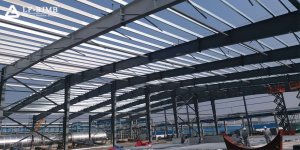
Equipment halls with overhead cranes for turbine and generator components.
Maintenance workshops with crane rails and vehicle bays.
Spare parts and general warehouses for stores and project materials.
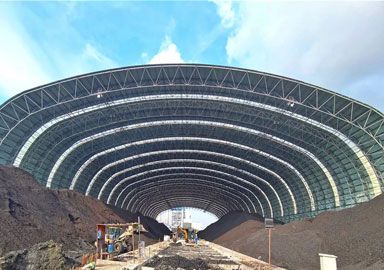
Coal or bulk storage sheds for fuel handling.
Pump houses and compressor buildings for water, fuel and gas systems.
Electrical and control buildings for switchgear and control rooms.
Bolted space frames and pipe trusses can be considered for larger clear spans,depending on the building layout, loads and structural design. Both systems prefabricate off site and erect fast, which matters when commissioning dates are fixed.
For coastal or humid sites, the corrosion protection system should be selected according to the exposure conditions, required service life and maintenance plan. Hot-dip galvanizing or a suitable protective coating system may be considered where appropriate.
A power plant may have several steel buildings under construction at the same time. If crane clearances, door locations, equipment access or delivery dates are not coordinated, changes in one package can affect work elsewhere on site.
For EPC contractors, it helps to define the scope, structural loads, interfaces and delivery sequence before fabrication begins. A supplier handling several building packages can support this coordination, provided responsibilities and technical interfaces are clearly agreed.
The goal is straightforward: have each building ready when the project needs it, without creating avoidable delays for equipment installation or commissioning.
Q: What span do power plant equipment halls reach?
A:Portal frames cover medium spans; bolted space frames cover 40 to 80 meters clear, wide enough for turbine components and trucks.LF-BJMB space frame structures can span up to 200 meters without internal columns.
Q: Can all the site buildings come from one supplier?
A:Yes. Equipment halls, workshops, warehouses ,coal sheds, raw material yards and fuel sheds can be supplied as one coordinated package, reducing EPC interface risk.
Q: How is coastal corrosion handled?
A:Members are hot-dip galvanized or coated with heavy-duty paint, matched to the coastal or humid plant environment.Stainless steel, composite materials and factory-applied coatings are also available where appropriate.
A power plant runs on its surrounding buildings as much as on the turbine. Large-span steel structures cover them fast, clearly and on schedule.
LF-BJMB designs and supplies equipment halls, workshops, warehouses and storage sheds for power and energy projects. Share your power or energy infrastructure requirements with us, and we will return a structural scheme.
For more project cases, visit our Solutions section.
Copyright © Xuzhou LF Engineering & Construction Co., Ltd. All Rights Reserved.


 +86 177 5198 6706
 +86-516-8595-0258


