

+86 177 5198 6706
222, Block B, Diamond International, Guozhuang Road, Xuzhou, Jiangsu, China
Mining projects require a range of steel structures, from the process plant itself to the facilities that support daily operations. The main groups include process plant structures, bulk storage sheds, conveyor galleries and transfer towers, maintenance workshops and warehouses, and non-process buildings such as laboratories and offices. Each group has different design requirements, and the connections between packages need to be defined before procurement begins.
Process facilities include crushing and screening stations, grinding halls, flotation or leach buildings, reagent stores and thickener access structures. Their layouts depend heavily on the equipment and process requirements. Process engineers provide equipment and operational inputs, while structural engineers are responsible for the structural design, often working under the EPCM contractor.
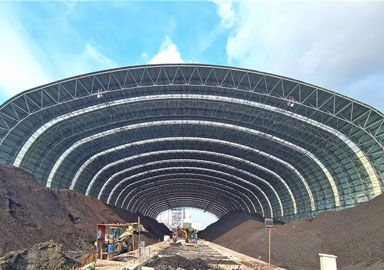
Outside the main process facilities, there are structures that keep the plant running: coarse ore and concentrate storage sheds, where long-span space frames may provide column-free roof coverage, conveyor galleries and transfer towers, workshops with overhead crane loads, warehouses and laydown areas, plus laboratories, offices and camp buildings. Pipe racks, equipment platforms and access structures may also form part of the steel procurement scope. These facilities still need clear engineering ownership, even when they are outside the main process package.
A structure can be procured separately when its design requirements, support conditions and erection sequence can be clearly defined. Bulk storage sheds are often suitable because their roof structures can be designed around defined support arrangements. Warehouses and workshops can also be separate packages.
Conveyor galleries need more coordination. Some are supported by independent bents or trestles, while others connect to transfer towers, process buildings or storage structures. Where these interfaces are shared, the RFQ should identify the support reactions, connection responsibilities, movement allowances and design boundaries at each end.
The same items can appear on two bidders’ scope lists or be left out entirely: gallery support bents, transfer tower steel around the chute box, stair and platform steel, handrails, cable tray supports, and the edge framing where a shed roof meets a gallery opening.
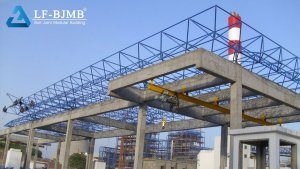
An interface register helps prevent this. It should list each junction, the responsible party, design basis, applicable tolerances and required delivery date. Reviewing this information before the tender is issued can prevent scope gaps later.
Much of the structural cost is influenced by decisions made before the steel RFQ is issued, particularly the building geometry and load schedule. Buyers should confirm the span and bay spacing, clear height measured from the finished floor to the lowest relevant obstruction in the operating area, dead and live loads, and equipment loads at their actual support points. Equipment suppliers should provide operating loads and dynamic information, while the structural designer establishes the applicable design factors and load combinations.
Material loads also need to be defined according to the structure involved. Bins require consideration of material pressure on their walls and other relevant operating conditions. For stockpile sheds, the effects of stored material on the ground, retaining structures and foundations should be distinguished from loads acting on the roof.
Two other items deserve early attention: the coating system for each environment, since a covered stockpile and a wash plant may require different corrosion protection, and the transport envelope. Fabrication dimensions, road restrictions, port handling and site access can all affect how members are divided for shipment and erection.
Three parties are usually involved: the owner, who establishes operating requirements and project constraints; the EPCM contractor, which coordinates engineering and interfaces; and the steel supplier, which handles the agreed structural design, detailing and fabrication responsibilities.
The RFQ should identify who provides interface loads, who designs each connection, who prepares fabrication drawings, who reviews submissions and who is responsible for site installation. Reviewing a drawing does not automatically transfer design responsibility to the reviewer.
Earlier than most tenders allow. During pre-feasibility and early design, the building layout and structural system may still be open for discussion. Input from a steel structure supplier at this stage can help assess practical spans, support arrangements, fabrication limits and installation requirements.
By the time a conventional supply-only RFQ is issued, much of the geometry may already be fixed, leaving less room to improve the structural solution.
A mining project securing financing does not necessarily mean its steel packages are ready for procurement. Several contracts may be tendered in parallel, including EPCM, mining, earthworks and long-lead equipment packages.
Four checks help establish the actual procurement status: whether a building scope has been published, whether a package owner has been identified, whether overseas fabricators are eligible, and whether the tender covers design services or actual steel supply. A consultancy award indicates project progress, but it is not evidence of an open steel supply contract.
LF-BJMB supplies structural steel solutions for large-span buildings, including space frames, steel frames, bolted spherical nodes and connection components. Depending on the agreed project scope, secondary framing, purlins, edge members, design support and node schedules may also be included. Components are marked and packed according to agreed fabrication and shipping requirements.
EPC services, civil works and foundations, process and conveyor equipment, mechanical handling systems, door systems, cladding installation, MEP, fire protection and site erection are outside our standard supply scope unless separately agreed. Our structures are designed for long-term performance under the agreed project conditions, with appropriate inspection and maintenance helping preserve their intended service life.
Q: Can one supplier take every mining building on site?
A: It depends on the supplier’s capabilities and the project scope. Several buildings can be grouped into one package when their design requirements, interfaces and erection arrangements are coordinated. Otherwise, separate packages may provide clearer responsibilities.
Q: Do we need a complete load schedule before the RFQ?
A: Not necessarily, but provisional values must be identified, along with the party responsible for issuing final loads and the date they will be confirmed. Missing information should be recorded as an assumption or exclusion rather than left open to interpretation.
Define the package list before the price list. Identify the building groups, establish their design requirements and assign responsibility for every structural interface. This gives suppliers a clearer basis for pricing and helps buyers compare quotations on the same scope.
If you are assembling a mining steel package, send the facility list and conveyor layout to [email protected] before the RFQ is issued.
Copyright © Xuzhou LF Engineering & Construction Co., Ltd. All Rights Reserved.


 +86 177 5198 6706
 +86-516-8595-0258


