

+86 177 5198 6706
222, Block B, Diamond International, Guozhuang Road, Xuzhou, Jiangsu, China
LF-BJMB Engineering Insight | Steel Structure Design, Optimization and Project Execution
In industrial steel structure projects, many cost decisions are made before fabrication begins.
The budget is limited.
The schedule is tight.
Site conditions are becoming more complex.
So the first question is often:
“Can the supplier reduce the price?”
It is a reasonable question.
Every project needs cost control.
But after years of working on large-span steel structures, industrial sheds, bulk material storage facilities, and other industrial projects, one thing has become clear:
The biggest opportunities to control project cost are often created before fabrication — through better engineering decisions.
The lowest quotation is not always the lowest project cost.
A well-designed steel structure can improve:
Structural efficiency
Fabrication practicality
Installation reliability
Long-term performance
Steel structure cost is influenced by much more than the initial quotation.
A lower price may create additional costs later because of:
Inefficient structural design
Excessive material usage
Difficult fabrication
Transportation limitations
Installation delays
Higher maintenance requirements
Real cost optimization is not about using less steel or cutting corners.
It is about removing unnecessary complexity before it becomes a problem on site.
Industrial steel structures are not standard products.
A coastal industrial building.
A mining facility.
A bulk material storage shed.
A remote industrial project.
They may look similar from the outside, but the engineering requirements behind them can be very different.
A practical solution needs to consider:
Operating environment
Structural requirements
Fabrication methods
Transportation conditions
Installation sequence
Future maintenance requirements
The best design is not simply the lightest structure.
It is the one that finds the right balance between:
✓ Safety
✓ Cost efficiency
✓ Constructability
✓ Long-term performance
Good engineering is not about adding more steel.
It is about using steel where it is needed and avoiding unnecessary material.
For large-span steel structures, early design decisions influence:
Material utilization
Load distribution
Fabrication efficiency
Installation practicality
A well-optimized structure can reduce material waste while maintaining the required structural performance.
Different project environments require different approaches.
Coastal projects may require stronger corrosion protection systems.
Mining facilities need to account for dust exposure, equipment movement, and maintenance access.
Bulk material storage structures require solutions that balance structural performance with long-term operating conditions.
The right material and protection strategy can improve service life and reduce future maintenance costs.
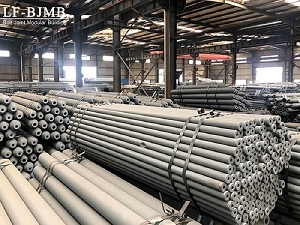
A structure that looks simple on drawings may become difficult to fabricate or install.
Engineering decisions should consider:
Fabrication methods
Component accuracy
Transportation limitations
Installation sequence
For large-span projects, constructability should be reviewed before production begins.
This early review also helps improve steel structure installation by identifying fabrication, transportation, and erection challenges before they reach the site.
The earlier these issues are identified, the easier they are to address.
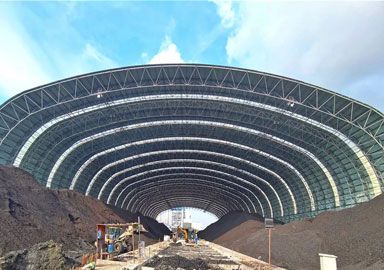
Large-span storage structures require more than structural strength.
Engineering decisions should consider:
Span efficiency
Material usage
Installation sequence
Environmental conditions
For bulk material storage solutions, bolted-sphere steel structures can provide efficient solutions for large-span coverage and practical installation.
Mining structures often operate under demanding conditions.
Engineering needs to consider:
Dust exposure
Equipment movement
Maintenance requirements
Continuous operation
A standard industrial shed solution may not provide the required long-term performance.
Remote projects create challenges beyond fabrication.
The structure must also account for:
Transportation limitations
Site conditions
Installation capability
A design that works well in the factory must also work at the project site.
For many years, steel structure suppliers have competed mainly through:
Lower prices
Faster quotations
Standard solutions
This may work for simple projects.
But complex industrial projects require more than a low initial quotation.
Project owners need partners who understand:
Where the structure will operate
How it will be transported
How it will be installed
What risks may appear during execution
The value of a steel structure company is not measured only by how much steel it can manufacture.
It is also measured by how well it can anticipate the engineering and execution challenges behind the project.
At LF-BJMB, we believe successful steel structure projects begin with understanding actual project conditions.
Our experience covers:
Large-span steel structures
Industrial sheds
Bulk material storage facilities
Mining and industrial projects
From engineering review and design optimization to fabrication control and installation coordination, our focus is on reducing risks before they appear on site.
Our approach includes:
✓ Customized steel structure solutions
✓ Design optimization before fabrication
✓ Coordination between engineering, manufacturing, and installation
✓ Adaptation to project conditions
We do not focus on providing the lowest quotation.
We focus on developing solutions that match the environment, construction requirements, and long-term operating needs.
Because successful steel structures are not simply manufactured.
They are engineered for the conditions they will face.
Steel structure cost optimization is the process of improving project value through better structural design, material selection, fabrication planning, transportation considerations, and installation strategy while maintaining safety and performance.
Because industrial projects have different environmental, operational, and construction conditions. Customized design helps reduce risks and improve long-term structural performance.
Project costs are influenced by design efficiency, material selection, fabrication complexity, transportation conditions, installation requirements, and future maintenance needs — not only steel prices.
A lower initial quotation may create additional costs when design, fabrication, installation, or maintenance requirements are not fully considered.
Engineering optimization helps identify potential problems before fabrication by improving structural efficiency, simplifying production, planning transportation, and supporting smoother installation.
Copyright © Xuzhou LF Engineering & Construction Co., Ltd. All Rights Reserved.


 +86 177 5198 6706
 +86-516-8595-0258


