

+86 177 5198 6706
222, Block B, Diamond International, Guozhuang Road, Xuzhou, Jiangsu, China
1. Classification of Loads
There are two main categories of external forces that cause structural imbalance or failure in buildings.
One category consists of various forces directly applied to the structure, also known as loads. These include permanent actions (such as self-weight of the structure, earth pressure, and prestressing forces), variable actions (such as floor and roof live loads, crane loads, snow and ice loads, and wind loads), and accidental actions (such as explosive forces, impact forces, fire, and earthquakes).
The other category consists of indirect actions, which refer to other forces that induce external deformation and constrained deformation in the structure, such as temperature effects, concrete shrinkage, and creep. Actions on a structure are classified into permanent actions, variable actions, and accidental actions based on their time-varying characteristics.
2. Effects of Loads on Structures
Permanent Loads: Structural creep, which causes cracks to widen.
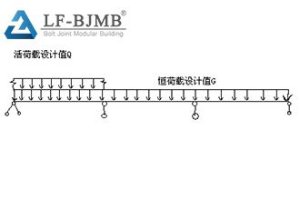
Variable Loads: Also known as live loads, these are loads whose values change over time within the design service life. Examples include installation loads, roof and floor live loads, snow loads, wind loads, crane loads, and dust accumulation loads.
Changes in the location where loads act on structural members may cause different effects on various parts of the structure, or even produce completely opposite effects.
Accidental Loads: Loads that may or may not occur within the design service life of the structure, but which, when they do occur, are of very large magnitude and of very short duration. Examples include explosive forces, impact forces, fire, and earthquakes.
Seismic Zones: Seismic forces are inertial forces on building mass caused by ground motion acceleration. The magnitude of seismic forces is directly proportional to the building’s mass.
Non-seismic Zones: Wind loads are the primary horizontal forces acting on building structures. Buildings with circular plans experience wind pressure that is nearly 40% lower than that of square or rectangular buildings, making them more resistant to horizontal forces. (Circular plans are the most energy-efficient: circular > elliptical > square > rectangular).
What is live load? Live load, also known as variable load, refers to the usage or occupancy loads applied to a structure by people, materials, and vehicles, as well as naturally occurring loads. It is not fixed and varies with changes in usage and operating conditions. Specific types of live loads include, but are not limited to, floor live loads in industrial buildings, floor live loads in residential buildings, roof live loads, roof dust loads, vehicle loads, crane loads, wind loads, snow loads, ice-encased loads, and wave loads.
Differences Between Live Loads and Dead Loads
1. Definitions:
(1) Live Load: A variable load associated with the building’s function and activities, such as people, goods, machinery, and wind loads.
(2) Dead Load: The weight of the building itself and the components and materials fixed to it, such as walls, beams, columns, floors, and roofs.
2. Characteristics:
(1) Live Load: Not fixed; it varies with changes in time and usage conditions.
(2) Dead Load: A permanent, fixed load that does not change with time or usage conditions.
3. Variability:
(1) Live Load: Its value changes over time, and the variation is significant compared to the average value.
(2) Dead Load: It does not change over time, or the variation is negligible compared to the average value.
4. Partial Safety Factors:
(1) Since live loads vary significantly over time, their partial safety factors must be relatively large to meet reliability requirements.
(2) Dead loads are relatively stable and do not vary significantly over time; therefore, smaller partial safety factors are sufficient to meet reliability requirements.
5. Design Considerations:
(1) In structural design, the effects of both live and dead loads on buildings and structures must be comprehensively considered to ensure structural safety and stability.
Copyright © Xuzhou LF Engineering & Construction Co., Ltd. All Rights Reserved.


 +86 177 5198 6706
 +86-516-8595-0258


