

+86 177 5198 6706
222, Block B, Diamond International, Guozhuang Road, Xuzhou, Jiangsu, China
Steel-frame buildings are highly durable and typically have a service life of around 100 years; however, due to various factors, few actually last that long. The following four key measures can effectively extend their service life, comprehensively addressing the entire lifecycle—from materials and construction to the environment and operations and maintenance:
1. Rigorous Material Selection: Ensuring Compliance from “Structure” to “Details”
Based on the building’s structural load characteristics and usage scenarios, carefully select suitable steel to ensure its strength fully meets requirements. Even down to the smallest detail—such as every connecting bolt—materials must comply with long-term service standards to prevent substandard components from shortening the overall lifespan.
2. Design and Construction: Maintaining “Quality Standards” at Both Stages
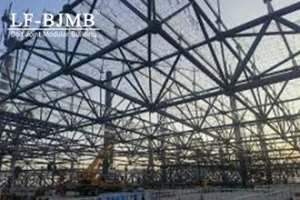
We clearly define material selection and strength parameters, and accurately complete structural calculations and design to avoid hidden risks caused by design deviations. We use compliant fire-resistant and welding materials and properly handle component joints; we implement standardized processes (such as applying two coats of anti-rust paint to steel structures and using color-coated steel sheets with ≥180 g/m² electro-galvanized coating and a “two-coat, two-bake” process) to enhance the structure’s corrosion resistance.
3. Environmental Adaptation: Prioritizing Prevention in “High-Risk Scenarios”
Dry environments have minimal impact on steel structure corrosion; therefore, special attention must be paid to environments with high humidity and highly corrosive air.
Such environments tend to cause damage to building edges and corners first, accelerating steel rusting and the peeling of protective coatings; targeted protective measures must be implemented in advance.
4. Regular Inspections to “Delay Aging”
The specifications for steel structures should clearly state usage conditions and maintenance requirements. For example, steel structures should undergo periodic inspections to extend their service life. Under normal environmental and stress conditions, the corrosion depth of steel structures is approximately 0.4 millimeters per decade (excluding corrosive environments); therefore, special attention must be paid to environmental conditions and maintenance.
Copyright © Xuzhou LF Engineering & Construction Co., Ltd. All Rights Reserved.


 +86 177 5198 6706
 +86-516-8595-0258


