

+86 177 5198 6706
222, Block B, Diamond International, Guozhuang Road, Xuzhou, Jiangsu, China
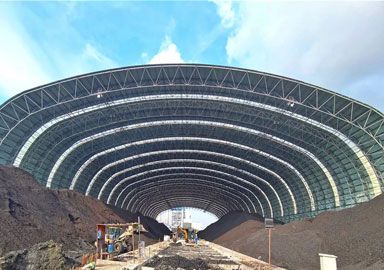
Steel-framed roofs play an extremely important role in buildings—providing shelter from wind and rain and ensuring smooth drainage. Whether in large-span sports arenas, exhibition halls, industrial plants, or logistics warehouses, a properly designed roof drainage slope is key to ensuring the structure functions properly.
If the slope is improperly designed, it can result in minor issues such as water pooling and leaks, which affect the building’s aesthetics and service life; in severe cases, it may lead to structural safety hazards during heavy snow or rain due to water accumulation and excessive dead loads. Therefore, the proper design of roof slopes is a critical aspect of steel structure design that cannot be overlooked.
So, what are the specific methods for designing roof slopes in steel structures?
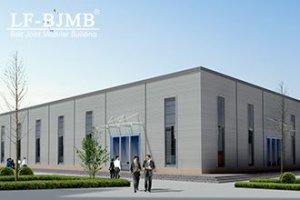
There are generally three methods for handling roof slopes in steel structures:
1. Installing small columns at the top chord nodes to create a slope: This method is relatively flexible. However, for large-span space structures, when the small columns at the central ridge are tall, the stability of the columns themselves must be verified. If necessary, a support system or other reinforcement measures should be installed. This method allows for the construction of double-slope, four-slope, or other complex multi-slope drainage roofs; for large spans, stability and seismic calculations must be performed.
2. Varying the height of the space structure: This method reduces the peak internal forces in the upper and lower chords of the space frame, making the internal forces more uniform. The disadvantage is that it involves too many types of members, making fabrication and installation difficult.
3. Raising the entire space structure: This approach involves raising the entire space structure to create a roof drainage slope, keeping the upper and lower chords parallel while only elevating the entire structure at the midspan. The disadvantage is that this creates an arch, which increases the horizontal forces on the supports; this factor must be considered in the internal force analysis.
Although the roof drainage slope is a detail, it is critical to the safety and service life of the steel structure. Selecting a reasonable slope method is an important aspect of how structural engineers demonstrate their “craftsmanship” in design.
Copyright © Xuzhou LF Engineering & Construction Co., Ltd. All Rights Reserved.


 +86 177 5198 6706
 +86-516-8595-0258


