

+86 177 5198 6706
222, Block B, Diamond International, Guozhuang Road, Xuzhou, Jiangsu, China
In today’s urban skylines, magnificent sports venues have become important symbols of modern urban civilization. Behind the scenes, steel structures are quietly transforming the way large sports venues are built, particularly for specialized facilities like basketball arenas that require large-span spaces.
Why has steel construction emerged as the preferred choice? The key lies in its unique material properties. Steel offers high strength and excellent ductility, meaning it can withstand enormous loads while absorbing energy through deformation when subjected to powerful external forces, thereby preventing sudden failure.
1. High strength, light weight, robust load-bearing capacity, large spatial spans, and unobstructed views
The tensile and compressive strength of steel structures is several times that of concrete structures, yet steel is much lighter. For example, for components supporting the same load, a steel structure weighs only 1/3 to 1/5 as much as a concrete one. This is crucial for large sports arenas.
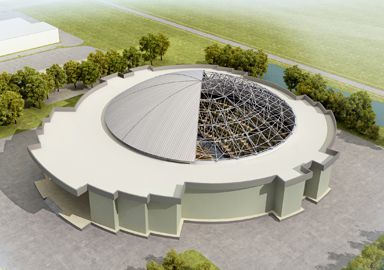
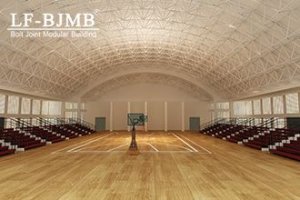
Furthermore, sports arenas have specific spatial requirements. Standard competition courts require vast column-free spaces to ensure unobstructed views for spectators. Steel structures are ideally suited to meet this need. By utilizing steel trusses, space structures, or cable-stayed structures, steel-framed arenas can achieve spans of 50 to 100 meters without any interior support columns. The lightweight steel structure reduces pressure on the foundation while effortlessly supporting the massive loads of the dome and spectator stands. This design ensures that spectators enjoy an excellent viewing experience regardless of their seat location.
2. Safe, Reliable, and Excellent Seismic Performance
Safety is the top priority for sports venues. Steel structures possess excellent ductility and ductility, allowing them to absorb energy through deformation during natural disasters such as earthquakes, thereby enhancing seismic resistance.
3. Rapid Construction, Reduced Build Time
Traditional concrete structures require on-site pouring and lengthy curing periods, whereas steel components can be prefabricated in factories as standardized or modular units and then transported to the site for rapid assembly. This “factory manufacturing + on-site assembly” construction model is 30%–50% faster than traditional concrete construction, significantly shortening the project timeline.
4. Energy-efficient, environmentally friendly, and sustainable
Against the backdrop of global advocacy for sustainable development, the environmental benefits of steel structures are particularly notable. Steel is a recyclable material with a recovery rate exceeding 90% upon building demolition. Compared to traditional concrete buildings, steel structures reduce water consumption by 40% and construction waste by 80% during the construction process.
5. Cost-Effective and Practical, with High Overall Benefits
From a return on investment perspective, while the initial construction cost of steel-structured sports arenas may be slightly higher than that of concrete structures (approximately 10%–15% higher), they offer a significant advantage in terms of life-cycle costs. Steel structures have low maintenance costs, requiring only periodic inspections and cleaning; damaged panels are easy to replace, and peeling or rusted paint surfaces are simple to repair. The high recycling value of steel also enhances the long-term investment appeal of steel-structured buildings.
Summary
The core requirements for large-scale sports arenas are “safety, practicality, aesthetics, and flexibility,” and steel structures perfectly meet all these needs—their strength ensures safety, their large spans enhance the experience, and their flexibility adapts to diverse scenarios, creating more safe, comfortable, and multifunctional sports spaces for people.
Copyright © Xuzhou LF Engineering & Construction Co., Ltd. All Rights Reserved.


 +86 177 5198 6706
 +86-516-8595-0258


