

+86 177 5198 6706
222, Block B, Diamond International, Guozhuang Road, Xuzhou, Jiangsu, China
In industrial steel structure projects, procurement is still frequently evaluated as a pricing exercise. Material supply only, supply with structural detailing, and full steel structure subcontracting are often treated as variations of commercial scope rather than fundamentally different execution systems.
This interpretation is one of the most common causes of downstream cost distortion in steel projects.
Once fabrication begins and materials enter the logistics chain, procurement decisions stop being commercial comparisons. They become execution structures that define how risk will surface across fabrication, transportation, and installation stages.
In most project environments, the lowest unit price does not reduce cost exposure. It only shifts risk to later and more expensive stages of execution.
Steel structure project cost is rarely concentrated in material procurement. It is distributed across three interconnected execution layers that only become fully visible during delivery.
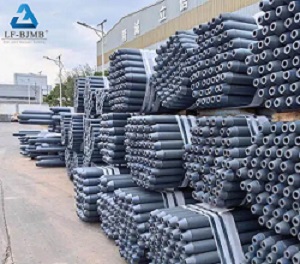
The first layer is direct fabrication and material cost, including steel supply, shop fabrication, surface treatment, and international transportation. This is the only part consistently visible during bidding and contract evaluation.
The second layer emerges during engineering coordination. Structural design must be translated into fabrication logic under different code systems, fabrication practices, and installation assumptions. Even when drawings meet technical compliance, differences in segmentation logic, connection detailing, and assembly assumptions can quietly create mismatch between fabrication output and site installation reality.
The third layer appears during installation. This is where most project cost escalation is generated. When fabricated components meet real lifting constraints, port handling limitations, or installation sequencing restrictions, even minor misalignment triggers cascading consequences such as rework, temporary modification, crane idle time, and schedule compression.
In constrained working environments, these effects do not remain isolated. They accumulate rapidly.
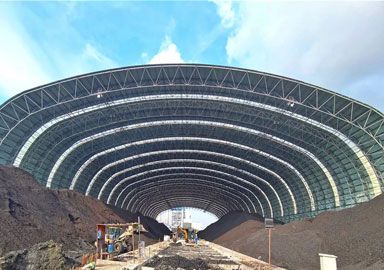
Steel structure execution is highly sensitive to coordination between design logic and site reality.
In terminal environments, construction often takes place within active operational zones. Installation windows are limited, working areas are restricted, and lifting operations must adapt to ongoing cargo activities. Under these conditions, even small deviations in fabrication sequencing or component segmentation directly affect installation continuity.
In mining and bulk handling facilities, remote logistics conditions reduce flexibility. Once fabrication and shipping cycles are locked, correction options become limited and expensive. Any mismatch between fabrication output and installation requirements must be resolved under time pressure and logistical constraints.
In multi-code engineering projects, structural design, fabrication, and installation may follow different standards simultaneously. Without early harmonization, interpretation differences appear during assembly rather than design review, when correction cost is at its highest point.
These constraints do not act independently. They reinforce each other during execution and amplify total project uncertainty.
The real difference between procurement models is not scope. It is the point at which execution risk is identified and resolved.
In material supply-only models, fabrication follows issued drawings without systematic constructability validation. Engineering responsibility ends at production. Any mismatch between design assumptions and site conditions is only discovered after components arrive at site. At that point, corrective actions occur under execution pressure, often involving field modification, emergency logistics changes, or installation interruption.
In supply with structural detailing models, engineering responsibility extends into shop drawing development, but installation remains outside the supplier system. This creates a structural interface gap between design intent and site execution logic. Lifting sequence, temporary works, and installation feasibility are not fully integrated, and inconsistencies typically emerge during erection rather than engineering review.
In integrated steel structure subcontracting models, engineering coordination, fabrication logic, logistics adaptation, and installation sequencing are managed within a unified execution system. The key difference is not that more scope is included, but that constructability is resolved before fabrication begins. Structural segmentation is aligned with lifting capacity, transport constraints are embedded into detailing logic, and installation sequence is validated before shipment.
This shifts risk from reactive correction to controlled engineering planning, the core advantage delivered via LF integrated structural subcontracting.
LF’s engineering execution system is built on one principle: structural risk must be resolved before it enters fabrication and logistics.
Before production begins, project execution conditions are evaluated as part of a unified engineering coordination process. This includes lifting capacity limitations, transport constraints, installation sequencing requirements, and site operational conditions.
Based on these constraints, structural segmentation is adjusted to ensure that fabrication logic aligns with installation feasibility. Shop drawings are not treated as isolated production documents, but as execution-driven interfaces between fabrication and site assembly.
In practical terms, this prevents a common failure pattern in steel structure projects: components that are technically correct but operationally misaligned.
The objective is not to eliminate uncertainty entirely, but to prevent uncertainty from reaching the construction stage in uncontrolled form.
The cost gap between procurement models rarely appears during contract signing. It emerges during execution when system-level misalignment becomes physical disruption.
When fabrication output does not match installation logic, projects begin to experience cascading inefficiencies. Structural components arrive in sequences that do not match erection priorities. Crane utilization increases due to repeated repositioning. Installation productivity declines due to rework and adjustment cycles.
In terminal environments, these mismatches quickly translate into temporary storage congestion and extended lifting windows. In industrial steel projects, installation rework affects not only material handling but also labor efficiency and equipment utilization simultaneously.
In most cases, the steel itself remains fully compliant. The cost deviation originates from system-level coordination gaps rather than material quality issues.
In steel structure projects, procurement price represents only the visible entry point of total cost.
The real cost difference between execution models is determined by when and how coordination risks are resolved. When alignment is delayed until installation, even small inconsistencies can escalate into schedule disruption, equipment inefficiency, and compounding execution costs.
Material procurement does not determine project outcome. Execution alignment does.
LF provides integrated steel structure subcontracting solutions focused on engineering coordination, fabrication logic alignment, logistics adaptation, and installation sequencing control.
For EPC contractors and project owners, early-stage constructability and execution alignment review is critical in reducing downstream uncertainty in complex industrial environments where schedule stability directly impacts project performance.
Copyright © Xuzhou LF Engineering & Construction Co., Ltd. All Rights Reserved.


 +86 177 5198 6706
 +86-516-8595-0258


