

+86 177 5198 6706
222, Block B, Diamond International, Guozhuang Road, Xuzhou, Jiangsu, China
Most steel structure failures are not created during erection.
They are created months earlier — before fabrication begins.
Installation delays.
Unexpected cost increases.
Repeated site modifications.
Crane downtime.
Schedule pressure.
These are the problems everyone sees during construction.
However, in many industrial steel structure projects, they are only the final results of decisions made much earlier.
The real risks often begin when engineering requirements, fabrication details and erection conditions are not fully coordinated before production starts.
This is why constructability review before fabrication plays a critical role in identifying potential conflicts before they become costly site problems.
When a steel structure project encounters difficulties, teams usually focus on visible problems:
These issues are real.
But in many cases, they are symptoms rather than the original cause.
The underlying problems often come from early-stage decisions:
A successful industrial steel structure project is not simply about producing components according to approved drawings.
The procurement model itself also influences how execution risks are controlled throughout fabrication, transportation and installation. Learn more about why steel structure procurement decisions affect final project cost.
It requires the entire delivery process to work together:
Engineering → Fabrication → Transportation → Assembly → Erection → Operation
When execution conditions are not considered before fabrication, those uncertainties eventually appear on site — where every correction requires more time, more labor and higher cost.
Many project teams naturally focus on construction progress.
But experienced engineering teams understand that project reliability is established much earlier — during design coordination and fabrication preparation.
Before the first steel member enters production, several critical questions must be answered.
Drawings define structural requirements.
But industrial construction takes place in real environments with real limitations.
Successful execution also depends on:
A design can satisfy engineering calculations and still create problems during erection if constructability is not reviewed early.
A reliable steel structure must not only be structurally safe.
It must also be practical to fabricate, transport and install.
Many site problems come from details that appear minor during engineering review.
For example:
These issues may not affect the drawing approval process.
But after fabrication and delivery, they can become:
A fit-up problem discovered inside the factory can usually be corrected quickly.
The same problem discovered after transportation may affect the entire erection sequence.
This is why fabrication verification before delivery is critical.
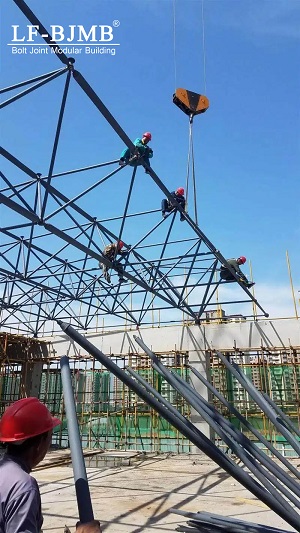
Steel structures are not completed when fabrication finishes.
They still need to be transported, assembled and erected efficiently.
Without early erection planning, projects may experience:
The question is not whether these problems can eventually be solved.
The question is:
Why allow avoidable problems to reach the construction site?
For industrial project owners, early engineering control directly affects:
A small engineering decision made before fabrication can prevent a major site problem months later.
Poor early coordination may lead to:
The earlier risks are identified, the easier they are to control.
Many steel structure projects follow a similar pattern.
At the beginning, everything appears under control.
Drawings are approved.
Contracts are confirmed.
Fabrication starts according to schedule.
Then erection begins.
Unexpected conflicts appear.
Teams start making adjustments.
Additional work increases.
The schedule becomes compressed.
Costs continue rising.
At this stage, the project is no longer improving efficiency.
It is paying for uncertainties that should have been controlled before fabrication.
At LF-BJMB, we believe reliable steel structure delivery begins before production.
Fabrication is only one stage of the project.
The real risk control starts earlier.
Unlike traditional steel supply models that focus mainly on component output, LF-BJMB focuses on whether the complete structure can successfully move from engineering concept to fabrication, transportation and erection under actual project conditions.
Our approach integrates:
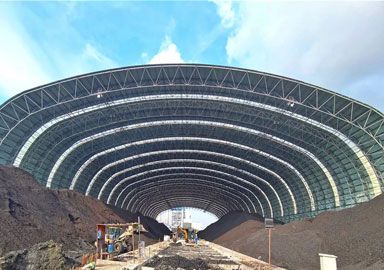
This execution-focused approach is also reflected in LF-BJMB’s experience with large-span steel structure project delivery and installation control
We do not only focus on whether steel components can be manufactured.
We focus on whether the complete structure can be delivered and installed without avoidable execution conflicts.
By identifying risks before fabrication, potential problems can be corrected when adjustments are faster, simpler and more economical.
Reliable steel structure delivery does not come from solving more problems during construction.
It comes from reducing uncertainty before construction begins.
For large-span steel structures, industrial storage structures and steel warehouse systems, early engineering control helps improve:
Most steel structure failures do not happen suddenly.
They develop from small uncertainties that were not identified and controlled early enough.
For complex industrial steel structure projects, success is often determined before fabrication begins:
When engineering decisions are reviewed.
When execution risks are evaluated.
When erection methods are confirmed.
A reliable steel structure is not created when installation starts.
It is created when engineering, fabrication and erection logic are aligned from the beginning.
Steel structure erection delays often result from incomplete coordination between design requirements, fabrication details, transportation conditions and installation planning.
Not always.
Drawings define structural requirements, but successful project delivery also depends on fabrication verification, transportation planning and erection sequence control.
Early engineering coordination, fabrication verification and installation-oriented planning help identify potential problems before they become site issues.
LF-BJMB specializes in large-span steel structures, industrial storage structures, steel warehouse systems and customized structural solutions for mining, energy and industrial facilities.
Through engineering coordination, fabrication control and erection-oriented planning, LF-BJMB helps industrial clients reduce execution risks and achieve more predictable project delivery.
Engineering decisions made before fabrication often determine the final project outcome.
Copyright © Xuzhou LF Engineering & Construction Co., Ltd. All Rights Reserved.


 +86 177 5198 6706
 +86-516-8595-0258


